





Iraq PM moves to reassure public
BAGHDAD: Prime Minister Nuri al-Maliki moved to reassure Iraqis on Thursday that his security forces were able to protect the population after a bomb killed dozens days before a major pullout of US forces.
At least seven people died in a new wave of bomb and gun attacks, as the White House insisted that President Barack Obama was not reconsidering pulling back US troops from Iraqi towns.
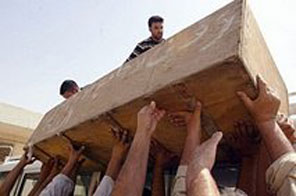
Wednesday's attack in a market in the overwhelmingly Shiite neighbourhood of Sadr City in northeast Baghdad was one of the deadliest this year, and also left about 150 people wounded, officials said.
"We assure you of Iraqi forces' readiness for the mission, despite some security violations, and we assure you that we are now more stable and steady," Maliki said.
He appealed to Iraqis to inform the army and police of any potential attacks, to ensure that the country did not return to the sectarian violence that blighted it throughout 2006 and 2007.
The flare-up of attacks throughout Iraq was part of "a plan that aims to awaken sectarianism, create chaos, abort the political process and prevent Iraqi people from standing on their own feet," he said.
In fresh attacks targeting civilians in the capital on Thursday, two people were killed and 31 wounded when two bombs went off within hours of each other at a bus station in southeast Baghdad.
Nine US soldiers were wounded when two roadside bombs hit their patrol in east Baghdad, the US army said.
And west of the capital, four Iraqi policemen were killed in two separate incidents near the former insurgent stronghold of Fallujah, police officers said.
An improvised bomb targeting a police patrol killed three officers, while a fourth policeman died in a drive-by shooting at a security checkpoint.
Near the main northern city of Mosul, a car bomb killed an Iraqi soldier and wounded 13 people, including four other troops, a police officer said.
On Wednesday, a motorcycle rickshaw loaded with explosives covered with fruit and vegetables caused a massive blast at a busy time in the Sadr City market.
The attacker jumped off the rickshaw and managed to escape before the bomb exploded.
It was the third major attack in Iraq this month, and means that June's death toll from violence will top the 155 Iraqis killed in May.
A June 20 truck bombing near the northern oil city of Kirkuk killed 72 people and wounded more than 200, the deadliest attack in 16 months.
On June 10, a car bombing in the largely peaceful southern province of Dhi Qar killed 19 people.
Despite the bombings, White House spokesman Robert Gibbs said the top US commander in Iraq, General Ray Odierno, had told President Barack Obama a June 30 deadline for American troops to leave Iraqi cities, towns and villages would be kept.
Asked whether Obama had any second thoughts about the pullback, or whether he had approached the Iraqi government about a change in arrangements, Gibbs said "No, No."
But commanders revealed that in the face of the persistent violence in Mosul, a deal had been reached for US troops to stay on in some districts of the city in a non-combat role.
"The Iraqi government has agreed on the stay of some non-combat troops," Major General Robert Caslen, the senior US officer in northern Iraq, told reporters.
"They will support Iraqi forces in anything they want, and they will be in five districts only, working with Iraqis."
Iraqi security forces came in for criticism over the Sadr City bombing, with residents throwing rocks and shouting at soldiers who fired rounds into the air in a bid to clear the area after the attack.
"Explosions like this confirm that the Iraqi security forces are not able to protect the people from violence or war," 20-year-old resident Saif Mohammed said.
Earlier this month, Maliki warned that insurgents and militiamen were likely to step up their attacks in a bid to undermine confidence in the Iraqi security forces.
Violence has dropped markedly in Iraq in recent months, with May seeing the lowest Iraqi death toll since the 2003 invasion. But attacks remain common, particularly in Baghdad and Mosul.
