Poor capital spending should be punishable
Shamelessly every successive government has always failed to utilise the development budget for years now
Kathmandu
As the budget presentation had been made one-and-a-half months before the commencement of the fiscal year 2016/17, from this time around it was believed that the longstanding problem of poor capital spending would not arise. However, this move also seems to have gone in vain, as hardly any improvement has taken place in the capital expenditure of this fiscal year.
Shamelessly every successive government has always failed to utilise the development budget for years now. Even when the size of the national budget was many times less than the present budget, the government at that time had been unable to spend the budget. In this backdrop, not spending on capital expenditure in a proper way should be treated as a crime that is punishable.
issues ignored
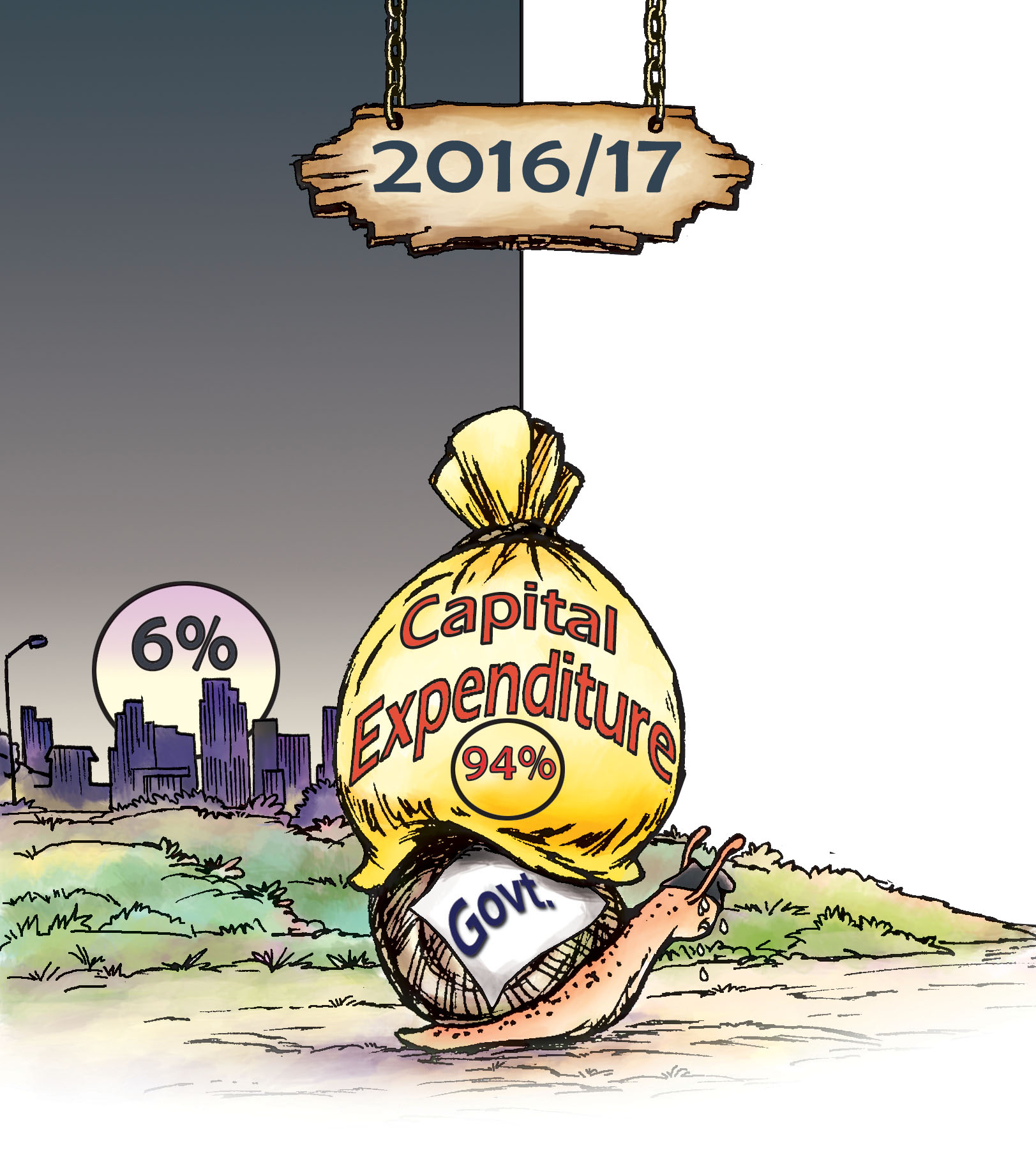
A few days remain to complete the first five months of this fiscal but the Ministry of Finance (MoF) has not been able to utilise much of its capital expenditure. As of December 8, merely 6.66 per cent (around Rs 20.77 billion) of the total capital budget (Rs 311.94 billion) allocated has been spent. Overall, only 18.85 per cent, around Rs 197.68 billion of the total budget of Rs 1,048.9 billion was spent during the first five months of this fiscal.
“In recent times successive governments are busy dealing with unnecessary political issues,” blamed Hari Bhakta Sharma, President of the Confederation of Nepalese Industries (CNI), stating that political issues have always dominated over the national economy and development issues. Citing that the government is merely focused on populist programmes, he said, “The progress in capital spending is at snail-pace as the major projects are sideline whereas recurrent expenditure is growing impressively.”
“Not having a proper mechanism for check and balance of development projects at the Prime Minister’s Office — being the top executive authority of the country is an irony,” said Sharma, adding that this is the reason why line-ministries and concerned stakeholders are not held accountable.
Citing that it’s high time the government started to work for prosperity of the country, he said, “As the GDP of the country has been failing and the economy is moving backward, the government has to pay heed to development projects of national interest without any delay.”
“Even early presentation of the budget has not improved the government’s inability to make wise use of capital expenditure,” blamed Pashupati Murarka, President of the Federation of Nepalese Chambers of Commerce and Industry (FNCCI). Citing that the government should manage a proper mechanism to implement the development budget, he said, “The poor performance on capital spending has multiple-impact on the economy,” adding that the low spending of capital expenditure is affecting industries and causing a liquidity crunch, unemployment problems and will finally result in low revenue collection.
Complaining that the government’s policy of awarding tenders to the lowest cost bidder is also unscientific, Murarka said, “It’s high time the government reviewed this unhealthy practice and award the tender to capable bidders.” He is of the opinion that the government should first prioritise project before allocating budgets to these projects.
“The unhealthy practice of randomly spending capital expenditure towards the end of the fiscal is nothing but throwing dust in people’s eyes,” he said. “As the government has not ascertained when and what nature of supplementary budget will be tabled, it has further created confusion and hurdles in capital spending,” he added.
“I am confused as to why there is a need for a supplementary budget while the government has not been able to make wise use of earmarked development budget”
Bishwomber Pyakhurel
Senior Economist
“The poor performance on capital spending has multiple-impact on the economy”
Pashupati Murarka
President of FNCCI
“From this time around MoF will not allow projects with nil performance till mid-February to initiate work afterwards”
Madhu Kumar Marasini
Chief of Budget Division, MoF
no accountability
“The long-standing problem of low capital spending is all because of lack of accountability among the concerned ministries,” said Maha Prasad Adhikari, CEO of Investment Board Nepal, adding that concerned stakeholder should be penalised for jobs not done whereas the timely accomplishment of projects have to be rewarded.
Citing that long and tedious bureaucratic procedure is one of the major reasons, he complained, “Shift in priority with frequent change in government is yet the biggest hurdle.”
Stating that the unhealthy practice of randomly spending the development budget towards the end of the fiscal is an abuse of authority, he said, “We could adopt the internationally popular practice of multi-year budget to cope with irregularities.” The government also has to divert resources from underperforming projects to progressive ones so that capital expenditure can be maximised.
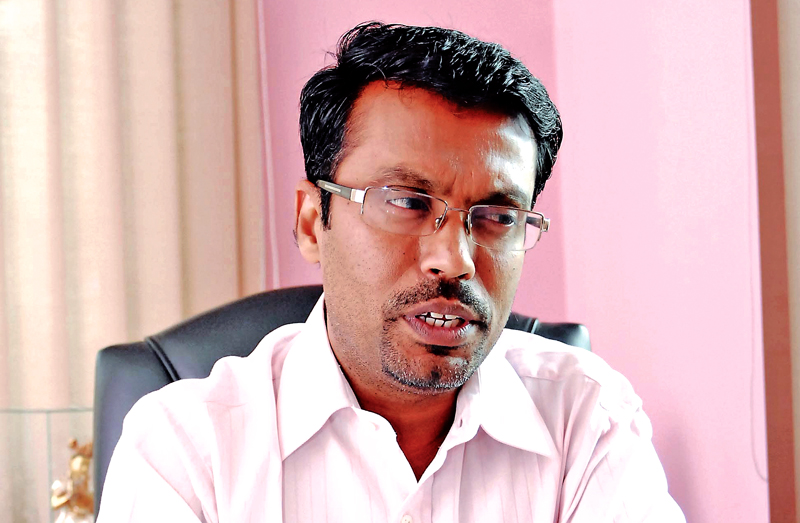
“The snail-paced capital spending indicates an alarming situation for the national economy,” said Senior Economist Bishwomber Pyakhurel, adding that the revenue collection has been exceeded by 101 per cent but the monetary policy is not supporting the economy as for the first time the nation had to buy dollars from Singapore.
Citing that all concerned government agencies have to be held accountable for their dismal performance, he said, “The bureaucratic hassles have to be sorted out and the administrative mechanism has to be strengthened. There is a huge chance of hyperinflation in the near future.”
“The country is stuck with political issues for decades, now the time has come to focus on the economic development of the country,” he said, adding that the and all party consensus on poushing the economic agenda is the need of an hour.
Stating that the national economy has been enjoying status quo for years now without any progress on any big projects, he said, “The government should immediately reprioritise the projects of national interest.”
On the supplementary budget that the government is expected to table in the near future, he said, “I am confused as to why there is a need for a supplementary budget while the government has not been able to make wise use of earmarked development budget.”
Admitting that performance is poor on capital spending, Chief of budget division at MoF, Madhu Kumar Marasini said, “We have asked line ministries and concerned stakeholders to submit action plans for timely accomplishment of projects that are moving slow.”
He also added that this time around MoF will not allow projects with nil performance till mid-February to initiate work afterwards.
Citing that the political instability and lack of coordination among concerned stakeholders could be the cause of low efficiency, he said, “We are hopeful that development works will accelerate in the days ahead as the Prime Minister’s Office itself is busy monitoring the major projects.
Budgetary status as of 2016-12-08
Amount in ‘000’ Rs
Description
Target / Budget
Up to Wednesday
Thursday
Total up to Thursday
Per cent
Revenue
RMIS
191,050,911
3,998,771
195,049,682
TSA
704,819
1,206
706,026
Total
565,896,500
191,755,730
3,999,977
195,755,707
34.59
Expenditure
1,048,921,354
195,211,011
2,471,359
197,682,369
18.85
Recurrent
617,164,129
160,339,867
2,127,388
162,467,255
26.32
Capital
311,946,325
20,435,335
343,970
20,779,305
6.66
Financing
119,810,900
14,435,809
--
14,435,809
12.05
Budgetary Surplus (Deficit)
(3,455,281)
(1,528,618)
(1,926,662)
Source: Financial Comptroller General Office