





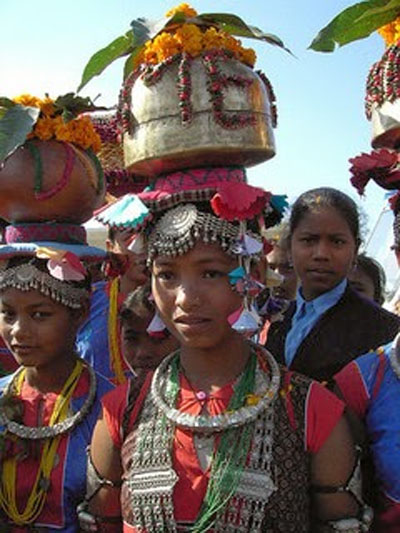
Tharu’s major festival 'Jitiya' begins today
KATHMANDU: Jitiya, a major festival of Nepali married women of Tharu community, has commenced with the observance of the 'Naha Kha' ritual, today. Naha Kha means to take food after taking the ritualistic bath.
On the first day of the festival today, women observing the fast partake of special food comprising beaten rice, curd and 'amot' (raisin of dried mango juice), after making offerings to the deity Jitamahan and the ancestors.
The offering to the deity and ancestors is made from mustard cake, molasses and mustard oil. The fasting is observed from 4:00 am on the day following 'Naha Kha' until 8:00 am the next day.
Usually, women are invited to their parents' home to observe the fasting for the longevity of their husbands and children.
Women observing the fast take holy dips in local rivers and ponds on the morning of this day. The devotees and juniors listen to the story of 'Jitamahan' told by the senior members of the community. The oil offered to the deity is given to the offspring who then apply it on their head and body.
There is a practice of family members eating food comprising bread (roti) made from millet flour, the curry made out of 'nuni' greens and fish, after performing the rituals on the first day of the festival. This special food goes by the name of 'Machh Maruwa' in local dialect.
Moreover, the fasting women have to observe what is called the 'Othgan' ritual which requires them to apply some food on their lips early in the morning before the cawing of crows.
Women performing the Othgan ritual usually take curd and beaten rice. Subsequently, their fast begins which is very tough in itself. It is performed on Ashwin Krishna Ashtami, eighth day of the waning moon in the month of Asoj as per the lunar calendar, according to Pundit Kalikant Jha.
The married people observe Jitiya fast wishing for the longevity of children, to be blessed with happiness and peace in the family. The festival carries religious, cultural and tantric importance, as per the believers.
The festival highlights the cultural role and importance of women in Tarai region. The festival that is observed in the Pitri Paksha (special period dedicated to the ancestors) also offers Pinda (ball of cooked rice or barley flour) to the departed souls.
Jitiya fast is observed as a scared ritual. There remains strict cultural belief that if woman observing the fast burps, coughs or mistakenly bites the tongue, her fast is believed to have been unsuccessful and she is forbidden from observing this fast forever in her life.
A myth associated with this festival is that once there was a king called Shalivahan. One day, a demon took away seven sons of a woman and it was the king who brought back her sons from the captivity of the demon. Since then, the very woman in gratitude to the king started observing the festival, renaming the king as Jitamahan.
READ ALSO:
