





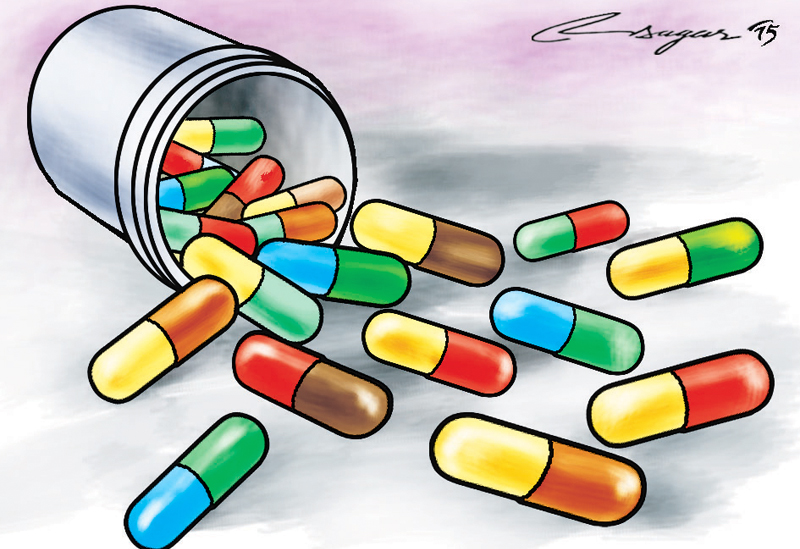
Antimicrobial drug resistance
Their widespread overuse and misuse in both food and animal production and human medicine have led to the adaptation of infectious microorganisms that are resistant to the very drugs trying to kill them
Antibiotics are the gift of science to human life. Use of the antibiotics has undoubtedly gained access in almost all aspects of biological applications ranging from food preservation to medical purpose. In medical aspects antibiotics have been used either for prophylaxis, empiric therapy or pathogen directed therapy which contributes the central role in control and management of infectious diseases.
The use of antibiotics shortly after its discovery has widened to such an extent that the overuse of then resulted in development of resistance by various bacteria. The trend of the development of resistance by bacteria against antibiotics is too high with respect to the discovery of new antibiotic that we can sorrowfully assume a time is close to us when no antibiotic available will be effective against infectious bacteria.
The morbidity and mortality of infectious disease have increased in parallel with the greater acquisition of antibiotic resistance by organisms, especially in regard to isolates that are completely resistant to antibiotic. Without gathering the information about the existing MDR (multi drug resistant) isolates, we cannot reduce the morbidity and mortality due to infectious caused by MDR pathogens; neither can we reduce the rate of emergence and spread of antimicrobial resistance. Appropriate use of antibiotics is central to limiting the development and the spread of resistant bacteria in hospital and communities.
Antimicrobial resistance has been a widely discussed topic in the public health world over the past few years. Antimicrobial antibiotics being the most common have greatly reduced infectious disease incidence and mortality since they were first used in the 1940s. However, their widespread overuse and misuse in both food and animal production and human medicine have led to the adaptation of infectious microorganisms that are resistant to the very drugs trying to kill them. These “superbugs”, which include bacteria, fungi, parasites and viruses, help to spread infections rapidly and make antimicrobials ineffective.
The major health institutions and professionals should espouse a ten-step program to prevent resistance to antimicrobial agents and the program is summarized infra. The program stresses the importance of preventing infection rapidly and positively diagnosing and treating infections, using antimicrobial agents wisely and preventing pathogen transmission.
Immunize to prevent common disease: Keep immunizations up to date, especially for likely diseases, exposures, etc. in addition to required vaccinations, this should include yearly influenza vaccination for nearly everyone, meningitis vaccines and pneumococcal immunizations for health care providers or those exposed to large number of people, as in school, colleges and the military.
Avoid unnecessary introduction of parenteral devices, such as catheters: All present a risk of introducing infection agents into the body. If such devices are necessary, remove them as soon as possible.
Target the pathogen: Attempt to culture the infection agent while targeting antimicrobial drug treatment for the most likely pathogens. After positive culture results, adjust the therapy to target the known pathogen and its antibiotic susceptibility.
Access the experts: For serious infections, follow up with an infectious disease expert. Get a second opinion if conditions do not rapidly improve after treatment has begun.
Use local data: Obtain and understand the antibiotic susceptibility pattern or profile for the infections agent from local health care sources. Treat infection, not contamination: Aseptic techniques must be followed to obtain appropriate samples from infected tissues. Contaminating organisms may be present on skin, catheters, or intravenous lines.
Obtain cultures only from the site of infection. Treat infection, not colonization: Treat the pathogen and no other colonizing microorganisms that are not causing disease. For example, cultures from normal skin and throat are often colonized with potential pathogens such as Staphylococcus spp. These may have nothing to do with the current infection. Treat with the least exotic antimicrobial agent that will eliminate the pathogen: Treatment with the latest broad-spectrum antibiotic, while efficacious, may not be warranted if other drugs are still effective. The more a drug is used, the greater the chance that resistant organisms will develop. For example some Enterococcus isolates are already resistant to Vancomycin, a relatively new broad-spectrum antibiotic, largely because the drug was over-prescribed to treat MRSA infections when it was first introduced.
Monitor antimicrobial use: Antimicrobial use should be discontinued as soon as the prescribed course of treatment is completed. If an infection cannot be diagnosed, treatment should be discontinued. For example, in the case of pharyngitis (sore throat), antibiotic treatment for Streptococcus pyogenes is often started before throat culture results are confirmed.
If throat cultures are negative for S. pyogenes treatment with antibiotics should be stopped. Antibiotics are ineffective for treatment of the viruses that are most probable causes of pharyngitis.
Rayamajhee is an M. Sc. in Medical Microbiology
