LETTERS: Dress code
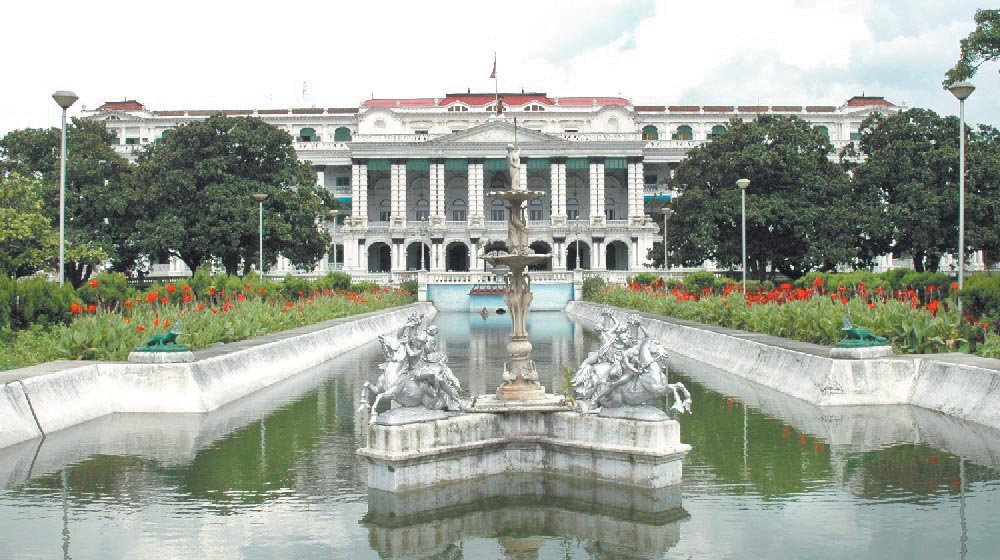
Apropos of the news story “70 staffers barred from Singha Durbar” (THT, March 28, Page 1). In Nepal, it is not surprising that the government employees have been violating the dress code when at work. According to the news story, some employees’ shirts did not match the dress code while others’ shoes were something else. This shows how careless the government employees are who work in the central secretariat. Any act in the Singha Durbar is directly reflected in other parts of the country. Instead of violating this rule all government employees should have given examples by wearing the proper dress so that the common people follow the laws and regulations. The government employees started negligence about their dress code after the authorities gave leniency to the civil servants who are the backbone of the government, also called the permanent government. If they flout with the rules, who else will abide by them? The government cannot deliver its services to the people unless it keeps its employees disciplined.
Saroj Wagle, Bara
Gharial
Thanks for the report “Endangered gharial census set to begin (THT, March 17, Page 7). Gharials are one of the endangered species of crocodiles in the subcontinent and are also endemic to the region’s restricted to Nepal and parts of northern India adjoining Nepal. The International Union for the Conservation of Nature (IUCN) has declared the species to be critically endangered. The species has become extinct in most part of its former range in Pakistan, Bhutan, Bangladesh and Myanmar. It has been rightly pointed out in the article that being a riparian species, gharials migrate with the river current from their habitats upstream or in upper catchment areas, Nepal, to their lower riparian or lower catchments habitats in India. Hence, it will be important to set up some organized cooperation and coordination and sharing of funds, expertise, knowledge as well as animal rearing and protecting skills from a conservation perspective between India and Nepal to protect this majestic species.
Saikat Kumar Basu, Canada
Maintain old vehicles
This refers to the news story “Govt Plan to implement law on old public vehicles hits road block” (THT, March 27, Page 1). India has also decided to stop using 20 years old vehicles. Nepal is a poor country. We do not manufacture vehicles. In Sri Lanka and many other countries vehicles are running smoothly. They maintain a very strict rule to maintain the old vehicles. The Government imposes heavy penalty to the defaulters. By just spending less than four or five percent of the total cost of the new car one can maintain the old one for long. Government should be very strict with old vehicle owners to check and recheck timely to maintain them well.
Rajendra Gurubacharya, Tahachal