








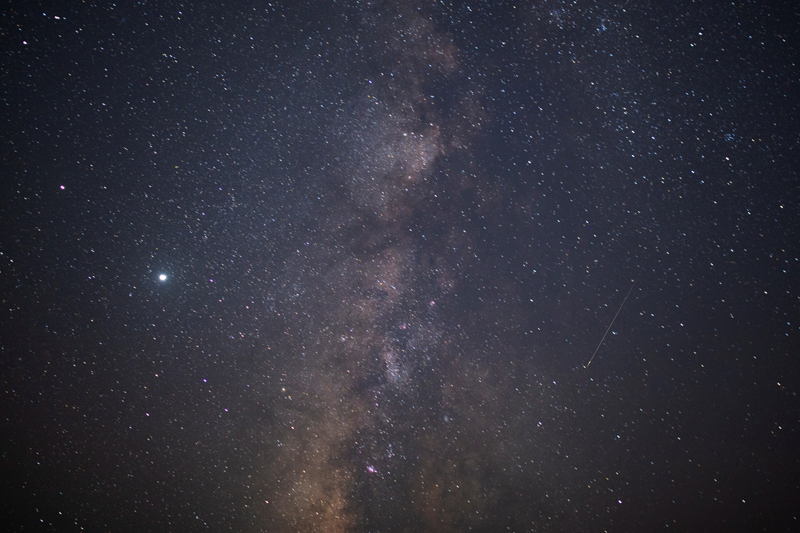
Great Perseid meteor shower is here but will the weather play a spoilsport?
KATHMANDU: Not only did the weather play a spoilsport during the great celestial show, as Perseid meteor showers were on peak, this year the moon phase (last quarter) too hindered enthusiasts from enjoying it as it impeded view of the shower peak.
Considered one of the best meteor showers of the year, Perseid meteors were at peak on predawn of August 13, however, enthusiasts can still view it till August 26 while it is still active.
According to Nepal Astronomical Society (NASO), this year, Perseid meteors will remain active from July 17 till August 26.
About 50-100 meteors can seen per hour during pleasant late-summer temperatures, but due to the phase of the moon, this year’s shower has reduced visibility to over 60 per hour down to 15-20 per hour. But the Perseids are rich in bright meteors and fireballs, so the hope is still alive to see them in early morning towards the Northeast sky.
These meteors are caused by debris left behind by the Comet Swift-Tuttle and began streaking across the skies in late July.
Swift Tuttle, which is currently near our Earth, takes 133 years to make one round of the sun.
When comets come around the sun, they leave a dusty trail behind them. Every year Earth passes through these debris trails, which allows the bits to collide with our atmosphere and disintegrate to create fiery and colourful streaks in the sky.
Their radiant—the point in the sky from which the Perseids appear to come from—is the constellation Perseus, from which Perseids got its name. However, the constellation is not the source of the meteors.
What other celestial events can be viewed this August?
Coming this month in August 15 before sunrise, you will also see Venus very close to crescent Moon lying to the east.
August 28 gives another spectacular view of the Moon, Saturn and Jupiter lying close in a triangular shape.
And finally, month of August will also provide a chance to view the Milky Way galaxy, if you look towards the southeast to southwest stretch of the sky. Given that sky is very clear, the dense part of the Milky Way will be visible all night. Best is said to be this week till the New Moon night on August 19 (called the Black Moon).
Compiled by Kriti Joshi
