





Millions strike in India over ‘anti-labour’ reforms
New Delhi, September 2
Millions of workers across India went on strike today in protest at planned labour law reforms, the biggest show of strength by trade unions since Prime Minister Narendra Modi took office.
They say labour reforms planned by Modi’s government will put jobs at risk, and are demanding it scrap changes that would make it easier to lay off workers and shut down unproductive factories.
All India Trade Union Congress secretary Gurudas Dasgupta said the response had been “magnificent� and estimated over 150 million workers participated in the strike.
The strike included staff at state-run banks and mines as well as some factory, construction and transport workers.
“This strike is a reminder to the government that it must consult the millions of employees (affected) before changing the labour laws,� striking bank worker Amit Khanna told AFP.
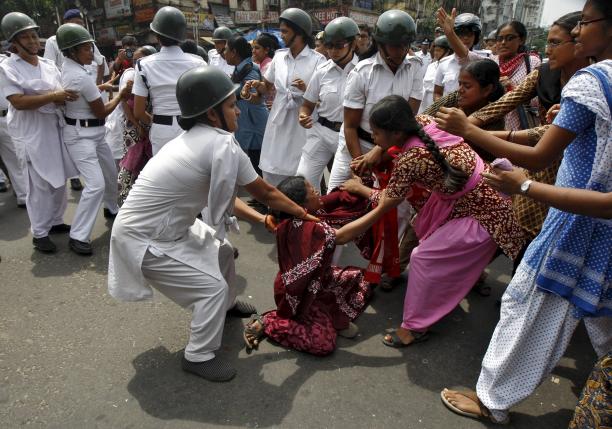
Most cities remained peaceful, but clashes between police and activists broke out in the eastern state of West Bengal, which has a long history of left-wing union activism.
Nearly 200 people were arrested across the state, the Press Trust of India news agency reported.Banks, shops and other businesses remained closed in the city, stranding commuters and travellers at the main station, while dozens of flag-waving protesters halted suburban trains.
In Delhi, long queues formed at bus stops, while passengers were stranded at airports as taxis and autorickshaws stayed off the streets. Some protesters forced autorickshaw and taxi drivers off the roads and vandalised their vehicles.
Industry body ASSOCHAM estimated $3.7 billion in economic losses from the strike, singling out the country’s ports where exports were stranded on the docks.
“Labour reforms are necessary and the government should intervene to come to an agreeable solution in the interest of the industry and the nation as a whole,� Associated Chamber of Commerce and Industry of India general secretary DS Rawat said.
Modi has promised a string of business-friendly reforms to attract foreign investment and revive Asia’s third-largest economy. His government wants to simplify India’s myriad and sometimes archaic labour laws, which date back to the British Raj.
Businesses argue that conforming to India’s 44 national and more than 150 state labour laws is not only costly and time-consuming, but has also deterred foreign investors.
The government’s proposals would make it easier for firms with as many as 300 workers to fire employees without needing government permission, up from the existing cap of 100, and make it more difficult to create new unions.
Although trade unions agree reforms are overdue, they oppose the proposals, saying they would leave workers with less job security while the level of legal protection on pay and other conditions would be reduced.
Some of the government’s reform bills have come up against opposition in the upper house of parliament where the government does not have a majority.
The unions went ahead with the 24-hour strike after talks with Finance Minister Arun Jaitley broke down.
They are also demanding the government improve social security measures and set a national minimum wage of 15,000 rupees ($250), up from current state set standards that range from 5,000 to 9,000 rupees.
