








KATHMANDU, APRIL 7
A two-day DAAD Alumni Symposium has highlighted key challenges and opportunities in Nepal's federal system, with a focus on the role of Generation Z in governance and development.
The symposium, titled "Federalization in Nepal in the Age of Gen Z: Challenges, Prospects, and Contributions from a Regional Planners' Perspective," was held in Nagarkot on March 25–26. It was organised by DAAD alumnus Chandra Bahadur Shrestha with support from the German Academic Exchange Service and the Embassy of Germany in Kathmandu.
The event brought together 44 participants, including policymakers, academics, development practitioners, media professionals and civil society representatives.
Speakers noted that Nepal is at a critical juncture where federalism intersects with a digitally connected and politically aware younger generation that demands transparency and accountability.
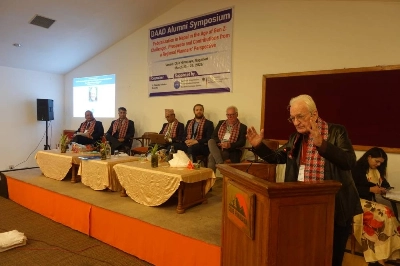
Key presentations were delivered by Hans Detlef Kammeier, Manfred Poppe, Sangeeta Singh and Ganga Dutta Nepal, who shared insights on governance, planning and policy.
Participants acknowledged that while federalism, introduced through the 2015 Constitution, aims to promote inclusion and decentralisation, its implementation faces challenges such as overlapping responsibilities among tiers of government, limited institutional capacity and continued centralised practices.
These issues, they said, have contributed to a growing trust deficit, particularly among young people.
The symposium emphasised the need for clearer delineation of roles across federal, provincial and local governments, stronger coordination, and enhanced institutional capacity. Participants also stressed the importance of engaging youth in planning and decision-making processes.
Concluding the event, participants noted that Nepal's federal system holds strong potential for inclusive and sustainable development, but its success will depend on effective implementation, improved service delivery, equitable resource distribution and greater public trust.
