








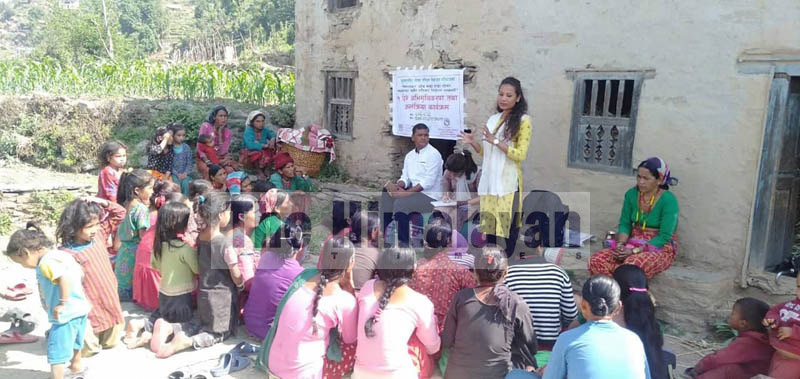
More people in Bajura opt for family planning
BAJURA: Pabitra Shahi (name changed), 21, of Swamikartik Khapar Rural Municipality in Bajura district has used a family planning device for the very first time. With the information and support provided by health professionals in the village, Shahi opted for a birth control implant.
Like Shahi, Sharmila BK (name changed) of the same village was also able to use family planning device for the first time. Health Office, Bajura in collaboration with ADRA Nepal launched a programme through which beneficiaries like Shahi and BK were able to receive family planning knowledge and service in their village itself.
Many people in rural areas of the district are unaware of family planning which results in the birth of multiple offsprings. This has repercussions on women's health as well as economic condition of families.
According to Ashok Singh, Acting Public Health Officer at Bajura's Health Office, in order to address this issue, health workers are going from village to village to raise awareness and provide family planning services to locals.
The aim of the awareness campaign and service delivery of the family planning methods is to improve maternal and child health, says Ratna Kayastha, Project Officer of ADRA Nepal, who is working in the district.
International non-government organisations like ADRA Nepal, UNFPA, Phase Nepal, Marie Stopes International, among others are collaborating with local government and Bajura Health Office to mobilise female health workers in villages so that they can aware the locals about various family planning methods.
Rugam Thapa, head of Statistics Department at Bajura's Health Office, with the mobilisation of health workers to aware people on family planning, there has been a huge increase in the number of service seekers. According to the statistics, in the fiscal year 2018/2019, as many as 7,089 people used temporary family planning methods.
Thapa explained that among the methods of family planning, 648 beneficiaries used birth control pills, 331 used Intra-Uterine Contraceptive Device (IUCD), 1,900 used implants, 2,342 used Depo-Provera, and 1,868 used condoms. He added that more people were using family planning devices in recent times.
