








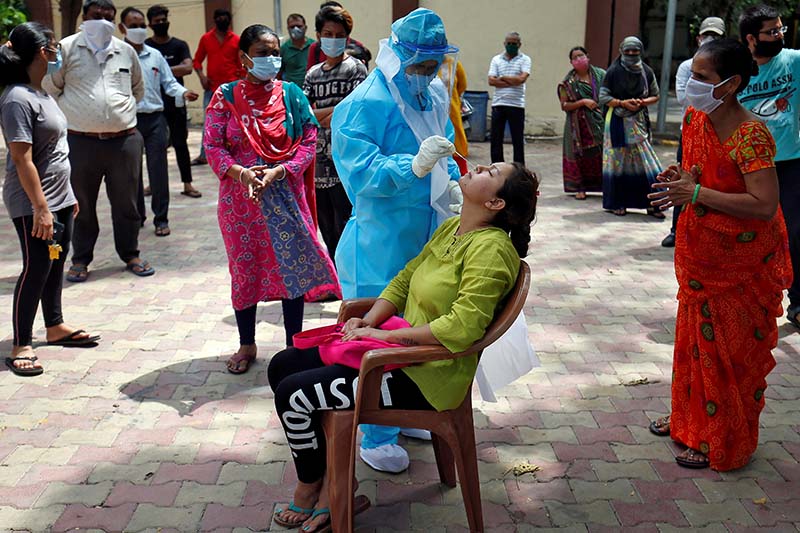
Worldwide coronavirus cases cross 13.60 million, death toll over 583,000
At least 13,603,951 people have been reported to be infected by the novel coronavirus globally and 583,300 people have died, a Reuters tally showed.
Infections have been reported in more than 210 countries and territories since the first cases were identified in China in December 2019.
The World Health Organization referred to the outbreak as a pandemic on March 11.
DEATHS AND INFECTIONS
At least 3,517,885 cases of the highly contagious novel coronavirus have been reported in the United States and its territories while at least 137,311 people have died, according to a Reuters tally of state and local government sources as of July 16, 2020, 3:24 PM. The US diagnosed its first COVID-19 case in Washington state on January 20.
Likewise, Brazil follows the US with a total of 1,966,748 coronavirus cases with 75,366 death, according to Reuters’ interactive graphic tracking the global spread.
Likewise, India has the third-highest 936,181 coronavirus cases while 24,309 people have died.
Meanwhile, Oklahoma's Kevin Stitt became the first US governor to test positive for COVID-19, while the country's leading expert on infectious diseases said he was confident the United States would meet its goal of a vaccine by the year end.
ASIA-PACIFIC
— A multi-billion dollar Japanese campaign to boost domestic tourism faced scrutiny, with the economy minister due to meet experts as critics worried that encouraging people to travel out of Tokyo risks spreading the coronavirus.
— Australia is injecting a further A$1.5 billion into a wage subsidy programme to counter rising unemployment as the country posted the biggest rise in coronavirus cases since early April.
— Prime Minister Benjamin Netanyahu announced a plan for government grants for all Israelis amid growing public anger over his handling of the coronavirus crisis.
EUROPE
— Barcelona may bring back some restrictions on daily life after the number of cases tripled in a week.
— Belgium postponed a further easing of rules on social gatherings after an uptick in the number of infections.
— Ireland has delayed the planned opening of bars and nightclubs by three weeks to Aug. 10.
AMERICAS
— Brazilian President Jair Bolsonaro extolled the supposed virtues of malaria drug hydroxychloroquine to fight COVID-19, as he said that he again tested positive for the coronavirus, a week after he first announced he had become infected.
— Argentina has suspended exports to China from six meat packing plants after COVID-19 cases were found among their employees.
— Leftist guerrillas and criminal organizations have attacked and killed civilians while enforcing curfews and quarantines across Colombia.
— Canada is on the cusp of zero deaths from COVID-19 for the first time since March, but officials see worrying signs of a new spike as provinces lift restrictions.
MIDDLE EAST AND AFRICA
— South Africa's cases of COVID-19 crossed 300,000, the most in Africa and among the 10 highest in the world.
— COVID-19 has killed four Kenyan health workers and infected 450, the health ministry said, as word emerged of a slew of cases in Kenya's biggest maternity hospital.
MEDICAL DEVELOPMENTS
— Novartis's Sandoz division will not make a profit on 15 generic drugs it is making available to developing countries to treat symptoms of COVID-19, the Swiss drugmaker said.
— China has approved an early-stage trial in humans of German firm BioNTech's experimental COVID-19 vaccine, its local partner Shanghai Fosun Pharmaceutical said.
— The US government will buy Becton Dickinson and Co's COVID-19 testing devices and kits, the company said.
ECONOMIC FALLOUT
— Global economic activity is picking up after an unprecedented decline this year due to the pandemic, but a second major wave of infections could trigger more disruptions, the International Monetary Fund's top official said.
— China's economy returned to growth in the second quarter after a deep slump at the start of the year, but domestic consumption and investment remained weak.
— The pandemic will swell the ranks of the poor and unemployed in Latin America and the Caribbean and drag the region's economic output down by 9.1%, a United Nations agency said.
