





Transitional Justice Act amendment unlikely this Parliament session: Secy
Kathmandu, February 28
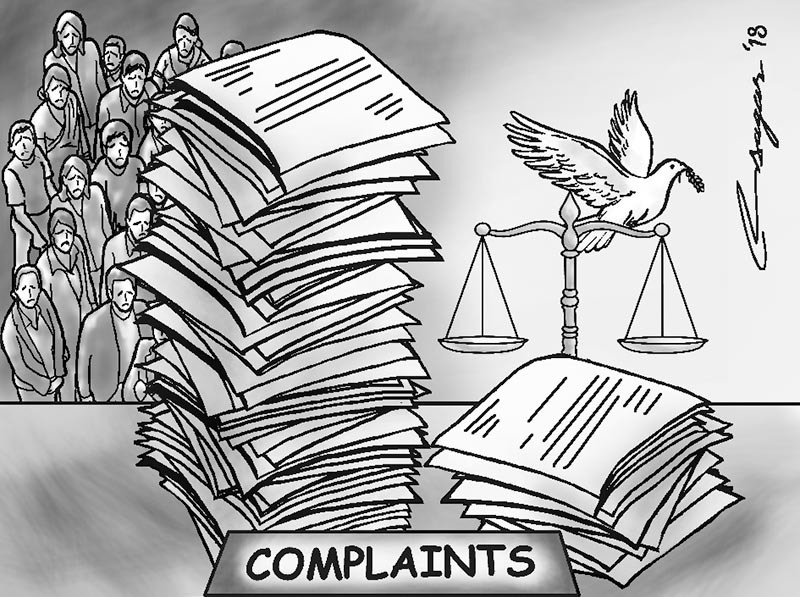
Secretary at the Prime Minister’s Office Ramesh Dhakal, who has been consulting conflict victims on transitional issues, said chances of the government registering a new bill to amend the Truth and Reconciliation Act was slim in the ongoing session of the Parliament.
“It’s not merely a legal issue but also a political issue that requires consensus at the political level and I think the political leaders are yet reach consensus,” he said. Dhakal added his office needed to hold more consultations with the conflict victims on transitional justice issues.
Rights activists have, however, criticised the government for its failure to amend the Transitional Justice Act.
Human rights activist Charan Prasai said if the government tried to appoint fresh office bearers in the two transitional justice mechanisms —Truth and Reconciliation Commission and Commission of Inquiry on Enforced Disappeared Persons — without amending the act, then they too would be unable to work effectively.
The government recently extended the term of two transitional bodies for one more year, but it did not extend the tenure of their office bearers whose term will expire on April 13.
“When the government decided to extend the term of the TRC and CIEDP for one year, it should have immediately amended the act in line with the Supreme Court order and international standards, but the government has done nothing about it,” Prasai said, and added the government’s intention was to delay the process.
He said capable people would not choose to work as office bearers of the two transitional justice bodies if the government did not amend the TRC Act soon.
Senior Advocate Dinesh Tripathi said the government needed to amend the TRC act, define and criminalise war crimes, remove statute of limitations for cases of sexual assaults committed during Maoist insurgency and bring new laws to govern the process of reparation.
“The government should have done all these things long time ago. It’s been 12 years since the Maoists joined the political mainstream and yet conflict victims have not got justice,” he added.
Tripathi said the perpetrators of human rights violations were emphasising on providing reparations to the victims but they were not talking of justice because they knew that if they did, they would have to go to jail for the crimes they committed during the conflict. He said transitional justice was such an important aspect in post conflict situation that even if perpetrators succeeded in manipulating the process, they could always be held accountable.
“If Nepal’s own system fails to ensure justice in conflict-era cases, chances of universal jurisdiction applying to human rights violation cases are high,” he said and added that in Cambodia, perpetrators were initially given amnesty but they were being tried for their crimes even after 48 years of the conflict.
He said if a separate political mechanism was formed as suggested by some ruling party leaders, then that would be a perpetrator-led process which would certainly not ensure justice.
